The best background noise for studying is a sound you stop noticing. If lyrics keep stealing your attention, try a steady non-musical layer, then compare it with a quiet room. Adding sound is useful only if it makes your actual task easier to stay with.
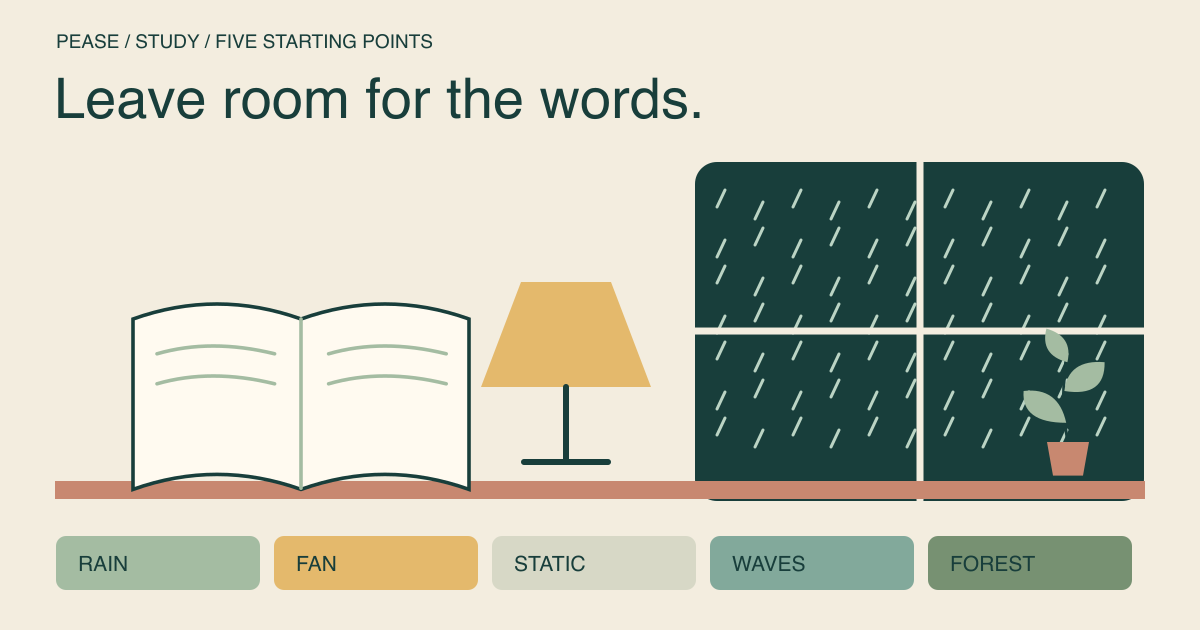
Below are five starting recipes you can play here, without an account. None includes the piano sound. The percentages are mixer settings, not measured loudness or a recommended listening level: start with your device volume low. Save a recipe to My mixes after signing in, or open it in the full mixer to adjust the individual layers.
Choose for the task on your desk
Reading a dense chapter, revising flashcards and formatting a presentation do not ask the same thing of your attention. Begin with the simplest sound for reading or memorising words. If you are doing repetitive visual work, a changing natural scene may feel more comfortable. If the room is already quiet, silence belongs in the comparison.
| Your task or setting | Try first | Change if… |
|---|---|---|
| Reading or writing | Rain with a little fan | You keep listening to the rain instead of the text |
| Memorising vocabulary | Fan alone, or silence | The extra sound makes recall harder |
| Unpredictable household noise | Quiet white noise | You need an uncomfortable volume to cover it |
| Drawing or organising notes | Waves or a forest scene | Each change pulls your attention away |
1. Rain at the study desk
Use rain as the main texture and a little fan underneath. Try it for one section of a chapter. If distinct raindrops become interesting enough to follow, lower the rain or move to the fan-only recipe. Adding more layers is not automatically an improvement.
2. A steady fan
A single layer gives you fewer things to adjust. This is a useful starting point for flashcards, proofreading or any task where you already have plenty of words in your head.
3. Soft white noise
Try white noise when scattered household sounds keep standing out. It may soften their contrast, but it will not make nearby speech disappear. If the hiss feels tiring, turn it down or switch texture rather than forcing yourself to get used to it. Our rain and white noise comparison walks through that choice.
4. A distant shoreline
Waves and a little wind create a more changing backdrop. Try this while sketching, sorting research material or planning a project. If you start waiting for the next wave while reading, that is useful feedback: choose something steadier for that task.
5. An open window to the forest
The forest layer brings more detail, while rain provides a common background. It is a candidate for a room that feels too still, rather than a promise of better concentration. Bird and leaf details can be appealing during a break and distracting during memorisation; lower the forest layer if that happens.
A small comparison that tells you something useful
- Pick one ordinary task: two pages to annotate, a short practice set, or a paragraph to revise.
- Spend about ten minutes with one recipe at a comfortable level. Keep notifications and other distractions the same.
- For the next similar block, try silence or a simpler recipe. On another day, reverse the order.
- Notice whether you reread sentences, follow the sound, or feel the urge to change it. Keep the option that makes the task feel easier to stay with.
This is a personal preference check, not a scientific test of memory or grades. You may end up with one mix for reading and another for routine work. Save only the ones you actually return to.
When the problem is conversation
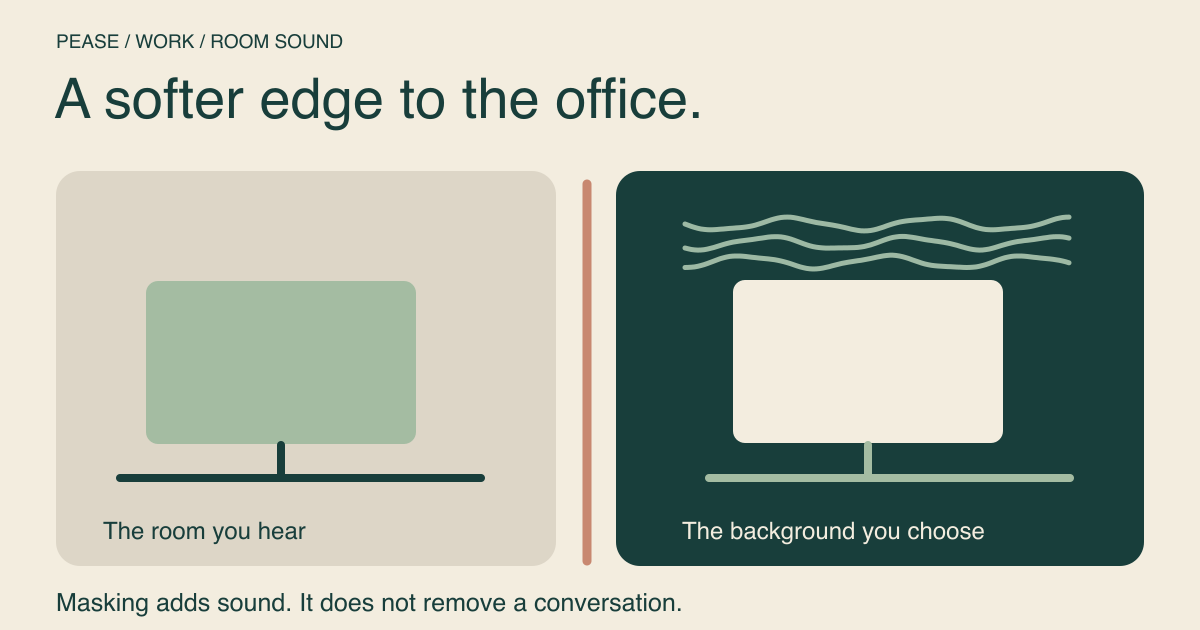
If you can follow every word from the next desk, adding more volume can make the whole room louder without solving the distraction. Moving, closing a door or agreeing on a quiet period may help more. See background noise for work for the difference between masking room sound and cleaning up a microphone.