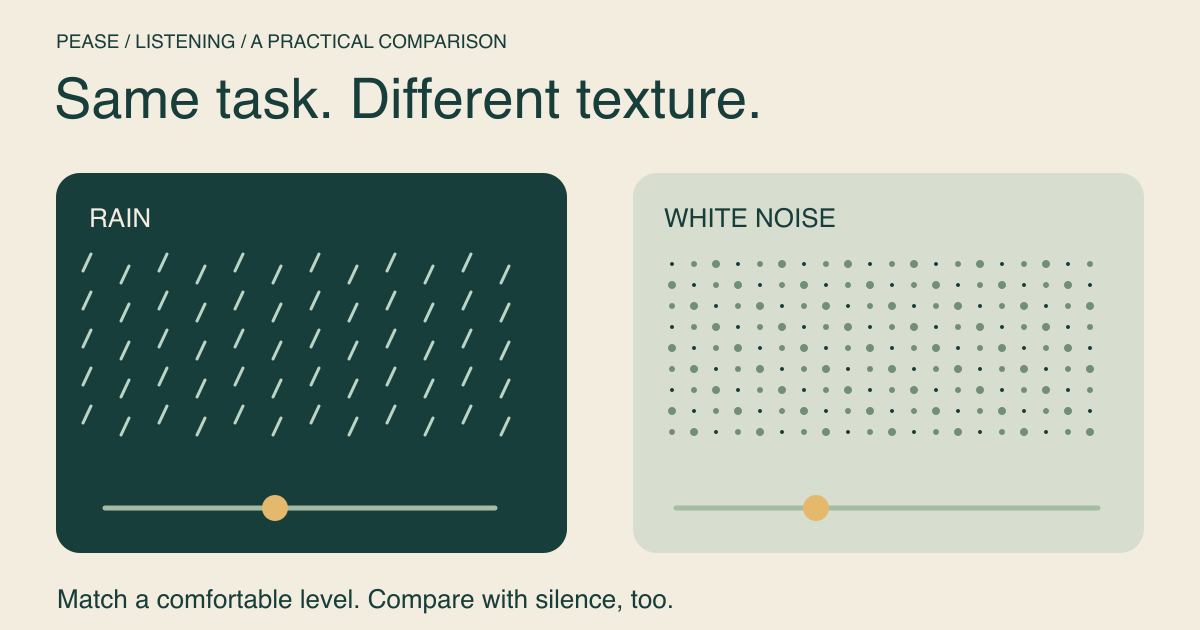
Choose rain if you prefer a textured natural background; try white noise if you want a more uniform hiss. Neither is universally better for focus. Your room, the particular recording, the volume and the task can matter more than the label.
These two previews make it easy to compare without adding music. They are not a controlled acoustic experiment: the percentages are mixer settings, and equal slider values do not mean equal loudness. Adjust your device volume so each sounds comfortable before judging it.
What changes when you switch?
| Question | Rain | White noise |
|---|---|---|
| What do you notice? | Weather texture, droplets and changes in density | A steadier, less scenic hiss |
| What may distract you? | Prominent drips or a repeating detail | The hiss itself, especially if too bright or loud |
| Where do you start? | A quiet rain layer without added thunder | A quiet single layer before adding anything else |
| Does it cancel nearby speech? | No | No |
Listen to rain on its own
Try a few minutes of an ordinary reading or writing task. You may enjoy the variation without following it. If you find yourself waiting for particular drops or noticing the loop, try a lower setting or a simpler sound.
Then try white noise
Pause or switch directly to this card. Bring the overall listening level to something similarly comfortable; do not assume its lower numerical setting makes it quieter. If the hiss feels harsh, reduce it. There is no need to tolerate an unpleasant sound to make this comparison “work.”
Is rain a kind of white noise?
In casual conversation, people sometimes use “white noise” to mean almost any background sound. In acoustics, white noise has equal power per unit of frequency. A rain recording is an environmental recording whose balance changes with the rain, surface, microphone and processing. It is not automatically white noise, even if both can sound like a broad wash.
We have not measured the frequency spectra of these previews, so the descriptions here are listening guidance, not a claim that the rain matches a particular noise colour. For definitions and sleep-related context, see white, pink and brown noise. Pease currently offers a white-noise layer; that does not imply separate pink- or brown-noise controls.
Compare on the task you actually need to finish
- Pick comparable pieces of work, such as proofreading two short sections.
- Try one background for a short block, then another. Keep the room and other distractions as similar as practical.
- Include silence if the room allows it. There is no reason to add sound when you prefer the quieter option.
- Notice rereading, discomfort, attention to the sound and how often you reach for the controls. Reverse the order on another day if the choice is close.
This will not establish a scientific performance effect. It can help you decide what to leave on today. You may prefer rain for planning and white noise for repetitive work, or decide both are unnecessary.
If you like parts of both
A small white-noise layer under rain is another option. Start low because the combined mix can feel louder. Open the full mixer to remove one layer if the blend is harder to ignore than either sound alone.
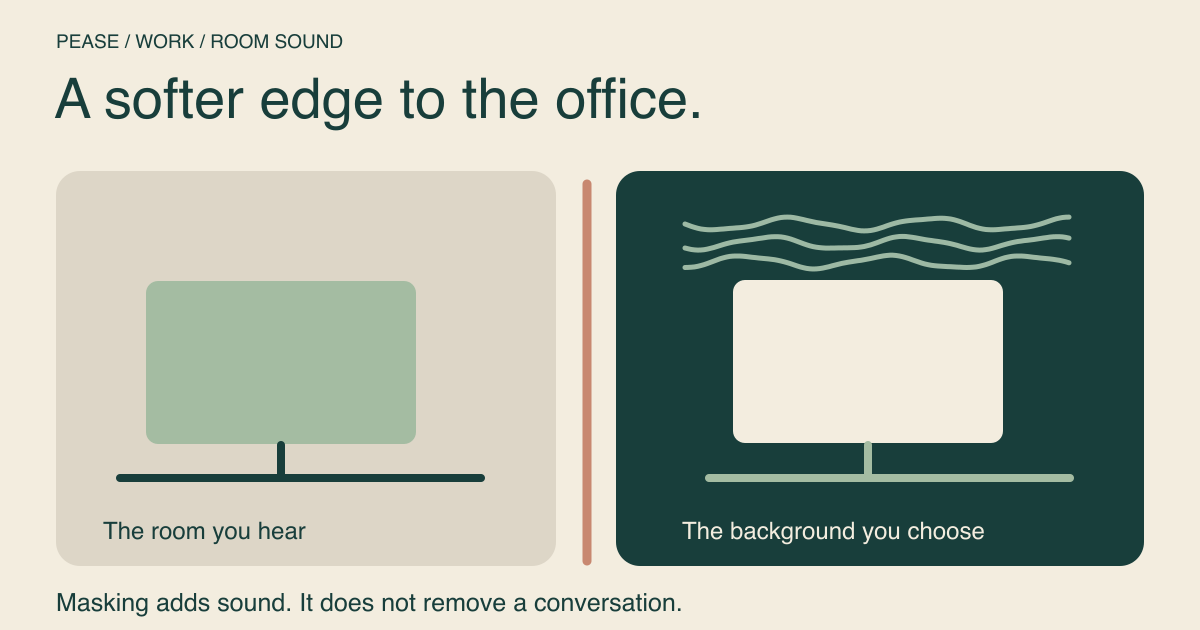
Save a card to keep its starting recipe, or save your adjusted version from the full mixer. If the main distraction is someone speaking nearby, read our work-noise guide before reaching for more volume. Background sound changes what you hear alongside the conversation; it does not remove the conversation.